
Teen Patti on King Exchange: From the Boot to the Show
Three Cards, One Simple Idea
Teen Patti takes its name from the Hindi words for three cards, and three cards are all anyone at the table ever holds. The game is played with a standard deck without jokers, every player is dealt a hand face down, and nobody knows what anyone else is holding. On King Exchange the game sits inside the casino lobby, one tap away from the sports side of your account, and it runs from the same wallet as everything else on your ID.
A round can be won in two ways. You can hold the strongest hand when the cards are finally compared, or you can simply outlast everyone else — if every other player folds along the way, the pot is yours whatever your three cards happen to be. That second route is what gives the game its flavour: the betting itself is a contest, not just the cards.
Hand Rankings, From Trail Down to High Card
There are only six kinds of hand to learn, and they always rank in the same order. From strongest to weakest, they are:
- Trail, also called a trio: three cards of the same rank, with three aces the highest hand in the game and three twos the lowest trail
- Pure sequence: three cards in a row that also share one suit, such as a queen, jack and ten of hearts
- Sequence, often called a run: three cards in a row with mixed suits, such as a seven, an eight and a nine from different suits
- Colour, also called a flush: three cards of the same suit that do not fall in a row
- Pair: two cards of one rank together with an unrelated third card; between two pairs, the higher pair wins, and the third card settles things if the pairs match
- High card: none of the above, so the hand is judged by its highest card first, then the next one down
| Hand | What It Looks Like | How Often You Will See It |
|---|---|---|
| Trail | Three cards of the same rank, such as three queens | The rarest hand at the table |
| Pure Sequence | Three cards in a row, all in the same suit | Very uncommon |
| Sequence | Three cards in a row with mixed suits | Uncommon |
| Colour | Three cards of one suit, not in a row | Shows up now and then |
| Pair | Two cards of one rank with an unrelated third card | Fairly common |
The Boot and How a Round Moves
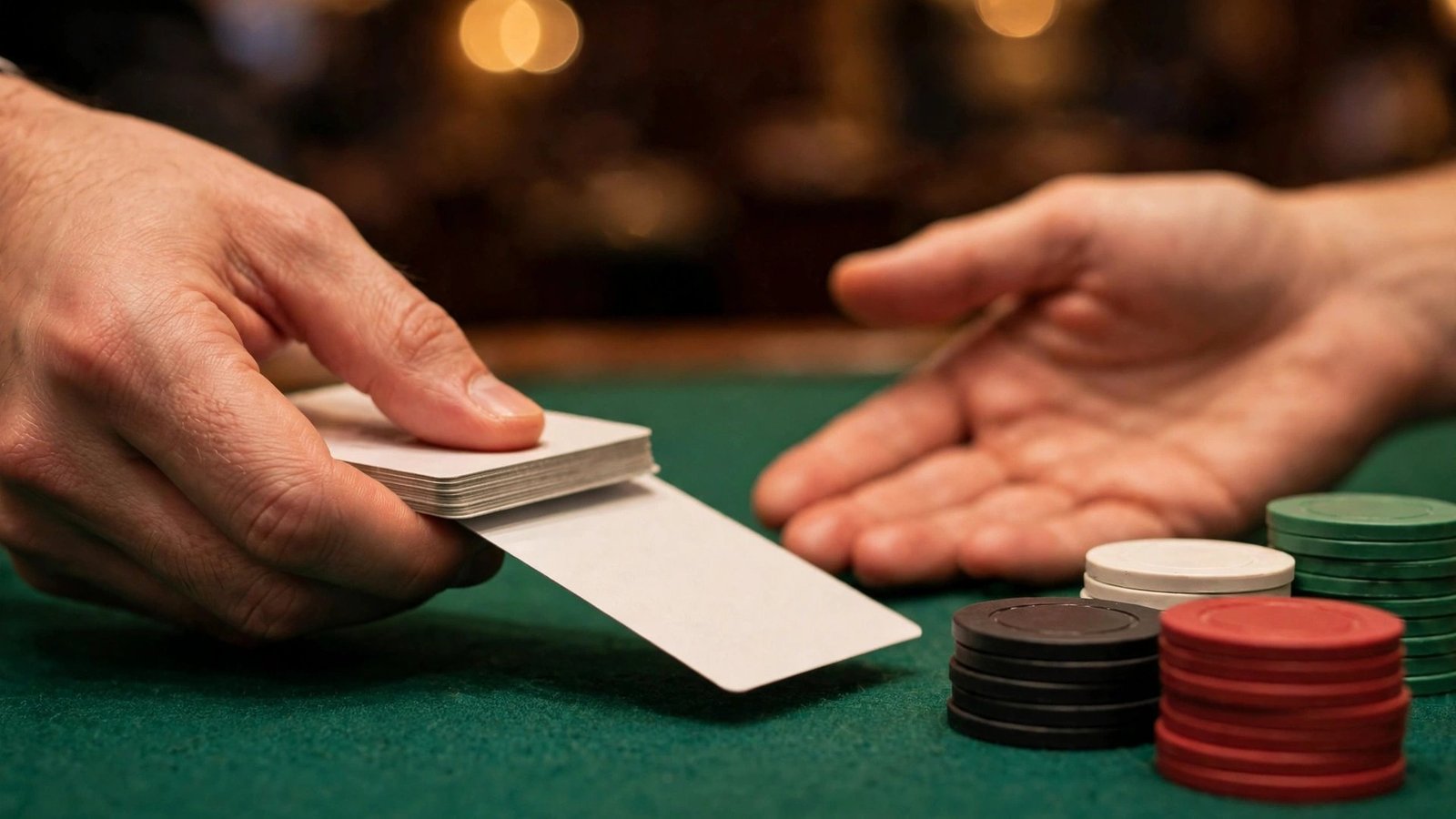
Every round of Teen Patti on the Teen Patti King Exchange tables begins the same way, with the boot. The steps of a typical round run like this:
Live Tables and Virtual Tables
Teen Patti King Exchange rooms come in two kinds. At a live table, a real dealer runs the game on a video stream: the cards are physical, the dealing takes the time it takes, and the pace feels close to sitting with friends, with a chat running alongside. The table has set seats and set betting windows, so each decision gets a calm, fixed amount of time.
A virtual table replaces the dealer with software. The cards are dealt by the programme, rounds start the moment enough players are ready, and everything moves faster with no stream to watch. Many players learn the shape of the game at virtual tables first, where the lower-key atmosphere suits small stakes, then move to live tables for the social feel. Neither kind changes the rankings or the rounds — only the pace and the company differ.
- Live tables: real dealer, streamed cards, slower and more social rounds
- Virtual tables: software-dealt cards, quicker rounds, play starts sooner
- Both kinds: identical hand rankings, boot and betting rounds
- Stakes differ by table, so check the table card before you sit down
Table Words in Plain Language
Half of feeling lost at a new table is vocabulary. These are the words you will hear and see on screen at any Teen Patti King Exchange table:
- Boot: the starting stake every player puts in before the cards are dealt
- Chaal: a normal betting turn, when you pay the going stake to stay in the round
- Blind: playing without looking at your cards, which costs less per move
- Seen: playing after looking at your cards, which costs more per move than blind play
- Pack: folding — handing your cards back and leaving the round with nothing further to pay
- Side show: a seen player asks the player who acted just before them to compare hands privately; the weaker hand must fold
- Show: the final comparison of hands when a round ends in a challenge
- Pot: the collected stakes in the middle, which the winner of the round takes
Habits That Keep a Session Sensible
Teen Patti rewards patience more than bravado. The strongest habit is deciding your whole session amount before you sit down and treating it as the cost of the evening's entertainment, never as money that has to come back. Within that, choose a table whose boot is small compared with your session amount, so one bad round is a shrug rather than a problem, and so you can survive the ordinary runs of weak cards every player gets.
Watch a table for a few rounds before joining if you can. You will pick up the pace, the stake sizes and the table's mood without spending anything. While playing, resist the urge to chase: the hand after a loss is dealt from the same indifferent deck as every other hand, and it owes you nothing. Players who enjoy Teen Patti King Exchange tables for years tend to share one trait — they leave at the time they planned to leave, up or down, and the game stays a game.
Frequently Asked Questions
Is Teen Patti a game of luck or a game of skill?
Both, in separate places. The cards you receive are pure luck and no decision changes them. The skill sits in what you do next: judging whether a hand deserves more stake, reading the table's mood, playing blind at the right moments and folding without regret. Good decisions improve your evenings; they never guarantee one.
What does playing blind actually mean?
It means betting without looking at your three cards. Blind players stake less on each move than seen players, which is the game's built-in reward for taking the risk of not knowing. Many players stay blind for the first round or two for the fun of it, then look and decide properly.
What is a side show, in simple words?
A side show is a private comparison. A player who has seen their cards can ask the player who acted immediately before them to compare hands away from the table; the weaker of the two hands must then fold. The other player may refuse the request, in which case the round simply carries on.
Which tables suit a beginner on Teen Patti King Exchange?
Start where the pace is gentle and the boot is smallest. Virtual tables are good for learning the order of play because rounds are quick and quiet, while live tables are better once you want the dealer-led rhythm. In both cases, watch several rounds before your first stake so the buttons and timers feel familiar.
How much stake do I need to join a table?
Each table posts its own boot and its minimum and maximum stakes on the table screen before you sit down, and tables differ from one another. Read that card first and pick a table whose boot is a small part of the session amount you have set yourself, rather than joining the first table you open.
Can I watch a table without playing?
Yes. You can open a table and follow the rounds as a spectator, and it is the cheapest education the game offers. Watch how the boot is collected, when players choose to play blind, and how a show is called. A quarter of an hour of watching will make your own first round feel familiar instead of rushed.
Ready to Open Your Account?
Every guide on this blog starts at the same place — an ID of your own. Message the team, receive your login, and put what you have read into practice at your own pace.
Get Your ID on WhatsApp